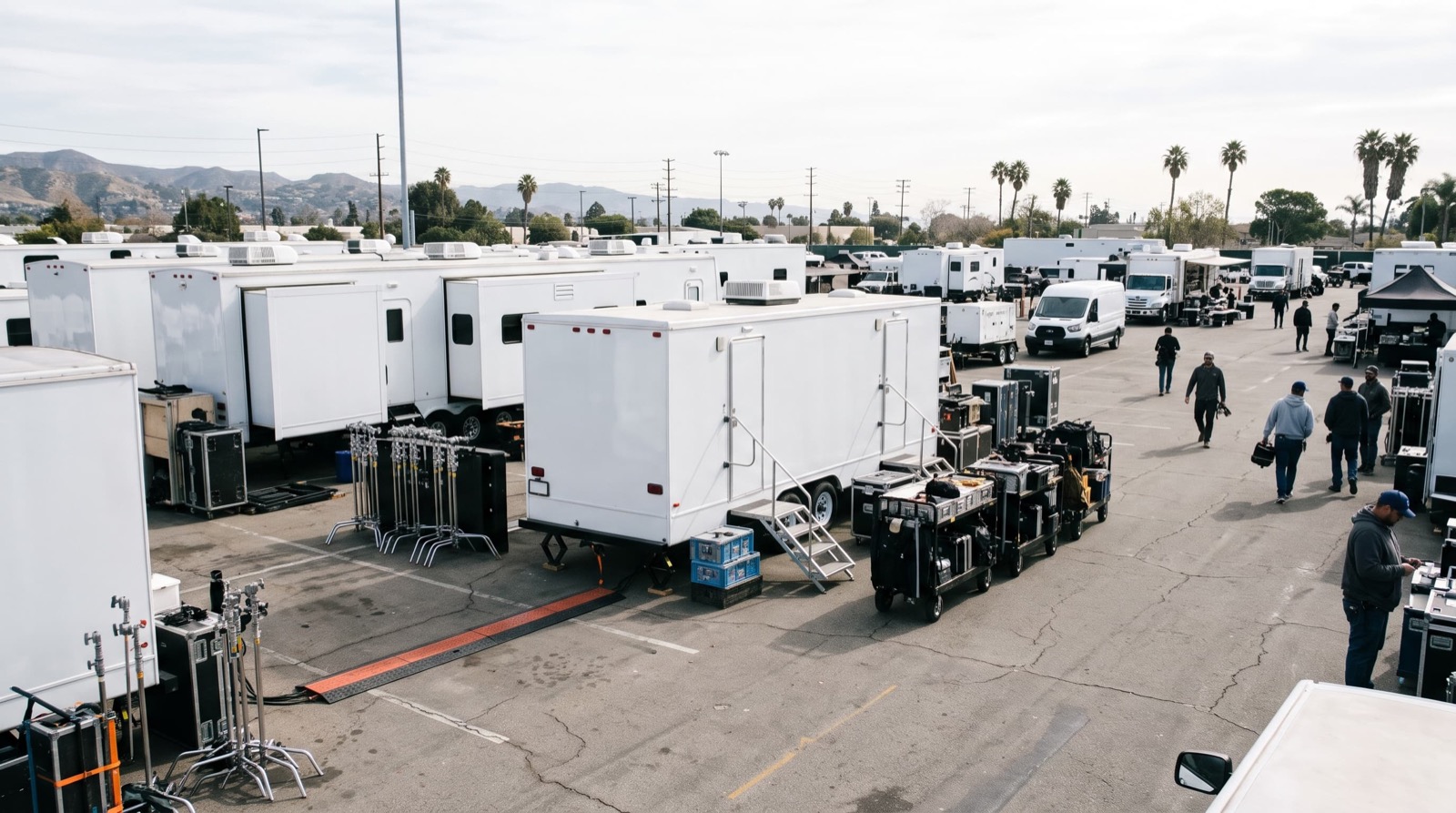
Why location shoots are different
California hosts commercial shoots, film locations, photo sessions and music videos in every setting from downtown streets to desert dry lakes and coastal parks. Many of those places have no restroom for the crew, and the crew can be large: cast, hair and makeup, camera, grip, electric, art, catering, security and drivers. Sizing for a headcount that changes by the hour calls for a bit of planning.
Count the crew, then the peak
Start with the call sheet. The number that matters is the maximum number of people at base camp at once, not the daily total. Add background performers and extras if they will use the same facilities. Then think about meal breaks, since catering time creates a surge. Use our calculator as a starting point and talk to us about long call times, which push the numbers up.
Layout of a base camp
- Crew units: near the parking and catering area, away from camera sightlines and sound.
- Cast units: a separate set near trailers or holding, for privacy. A restroom trailer is often used when talent is on site for many hours.
- Handwashing: next to the units and near craft services. See handwashing stations.
- Accessible option: include one if anyone on the crew or in the cast may need it. See accessible restroom planning.
Permits and location rules
Most public locations require film permits, and they often set conditions about parking, noise and the placement of equipment. Contact your local film permitting office early and ask whether portable restrooms are addressed in the permit. Private locations may have rules from the owner, a neighborhood group or the HOA. Share these conditions with us when you call so we can plan delivery around them.
Noise, light and neighbors
- Choose a spot that does not interfere with sound recording or background in your shots.
- Be thoughtful about where trucks will idle during early-morning delivery in a residential area.
- Keep generators, if you use trailers, away from the set and the neighbors.
- Keep the area tidy, since a neat base camp helps with future permit goodwill.
Early calls and tight schedules
Shoots start before sunrise and wrap after dark, so timing delivery and pickup around those hours matters. Tell us your first call time and wrap time so we can discuss delivery windows. For multi-day shoots, ask about servicing between days. See servicing.
Locations with special conditions
- Desert and dry lakebeds: sun exposure, wind and distance. Shade and water access matter.
- Beaches and coastal parks: strict rules about vehicles and sand. Ask the park about approved staging areas.
- Mountains and forests: narrow roads, weather swings and fire restrictions.
- Dense urban streets: limited curb space and tight timing for trucks.
The weather and wildfire guide covers seasonal considerations for each.
What to tell us when you call
Location type, dates and call times, peak headcount, whether you want crew only or cast and crew separate units, any trailer requirements and any permit conditions. Our event rentals page explains how we think about layouts and timing.
Planning a shoot? Call for a quote and we will talk through your base camp.
Last updated October 14, 2026. This guide is general information, not legal, engineering or regulatory advice.