Who regulates jobsite sanitation in California
Workplace safety in California is enforced by Cal/OSHA, the Division of Occupational Safety and Health, under Title 8 of the California Code of Regulations. California runs its own state plan rather than relying only on federal OSHA. Construction sanitation, including toilet facilities, is addressed in Title 8, section 1526. Outdoor heat illness prevention is addressed separately in section 3395.
What section 1526 generally covers
Section 1526 deals with toilet facilities at construction jobsites. In general terms, that includes how many facilities a site needs for its workforce, that they must be maintained in a usable condition, where they must be accessible from the work area and what to do on jobs where fixed facilities are not practical. It also touches on handwashing facilities. The table that sets the minimum number of toilets per number of workers is the part contractors most often want, and it is also the part you should read directly.
Please verify the current table and wording yourself. Rules are updated and have exceptions, so check the current text with Cal/OSHA or your company safety manager before relying on any number in a guide, including ours.
How the planning calculator fits in
The construction mode in our rental calculator is intentionally conservative. It estimates about one toilet for every 20 workers, which is a planning figure for ordering units, not the legal minimum. Your required number may be lower or higher depending on the regulation, crew size and conditions, so confirm it against section 1526.
Plan beyond the minimum
- Count every person. Include subcontractors, inspectors and visitors who will be on site at peak.
- Think about shifts. If everyone breaks at the same time, lines form. Staggered breaks help, as do extra units near lunch areas.
- Weather changes demand. In summer heat, people drink more and visit more. See the heat, rain and wildfire guide.
- Everyone on site. Make sure the setup works for every person on your crew, including anyone who needs an accessible option.
Placement on a real jobsite
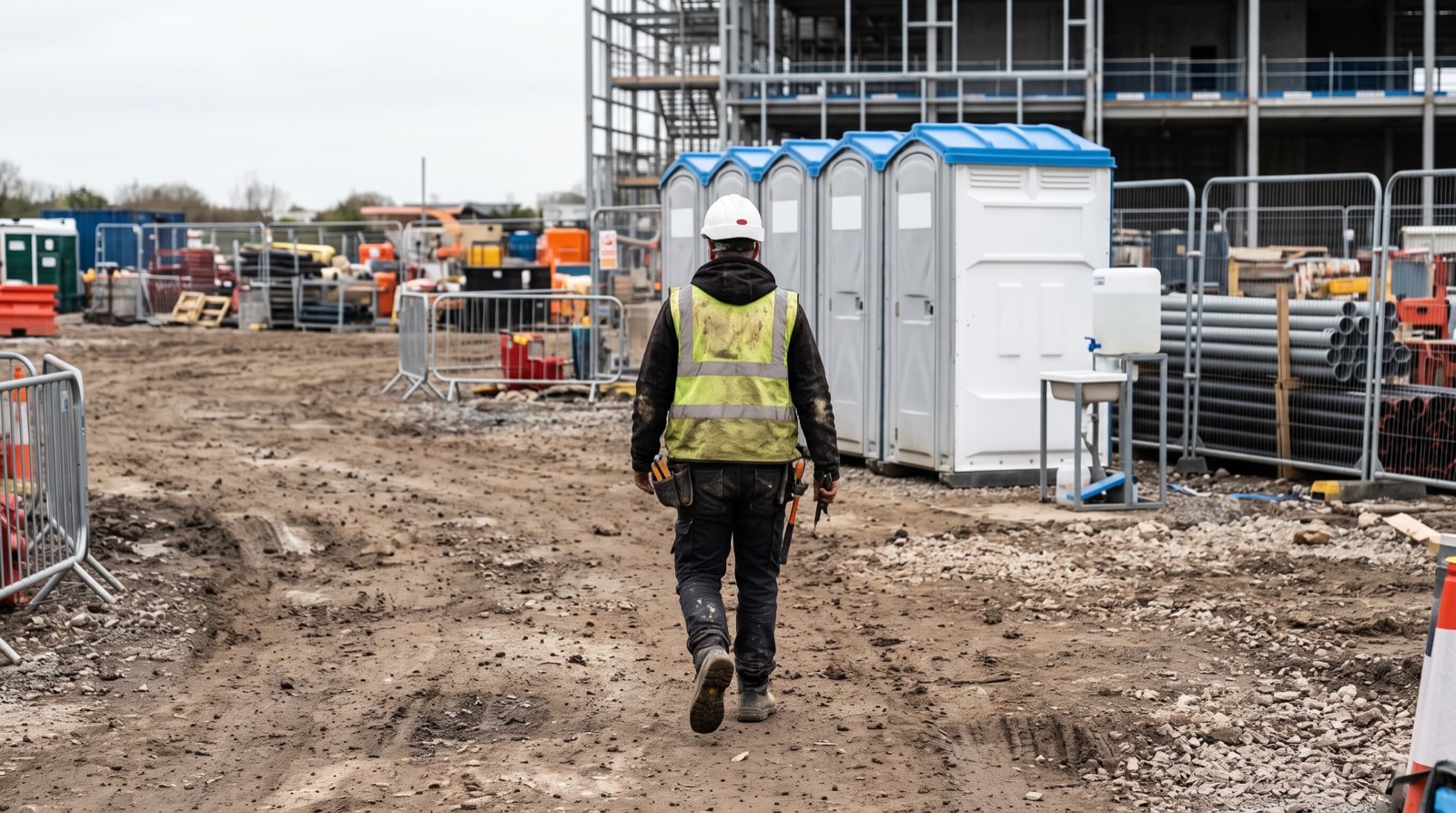
- Keep units reasonably close to where crews work, so people are not walking across the whole site.
- Place them on firm ground clear of haul routes, swing radius and excavation edges.
- Keep a clear lane for the service truck.
- Add handwashing stations next to the toilets and near eating areas.
- Plan for relocation as the site changes. See long-term rentals.
Servicing schedule
Weekly servicing is a common starting point, but heavy use, hot weather or a large crew may call for more. Agree on the schedule before the first delivery. Our servicing page explains what a typical visit involves.
Heat illness prevention
Employers with outdoor workers should review Title 8, section 3395, which addresses access to drinking water, shade and cool-down rest. Sanitation planning and heat planning often overlap: a shaded, well-supplied area near the toilets and handwashing is easier to supervise than scattered facilities.
Local permits and site rules
Cities, counties and some owners also set requirements for temporary facilities, screening and placement. Check them early, especially in dense urban areas where a unit may need to sit on a sidewalk, alley or public right of way.
What to have ready when you call
Peak headcount across shifts, expected duration, site address or nearest cross streets, access details and a site contact. Read our construction rentals page for more.
Ready to order for a crew? Call for a quote and we will help you plan the setup.
Last updated October 14, 2026. This guide is general information, not legal, engineering or regulatory advice.